

Tooth Sensitivity: Why Do Your Teeth Hurt When Hot and Cold?
Dantam Clinics
October 24, 2026
Have your teeth ever hurt when you drank a hot beverage or ate something cold? Brushing or flossing your teeth can also be unpleasant if your teeth are uncomfortable. It is important to understand what causes the discomfort so that you can care for your dental health.
Tooth sensitivity is a common condition in which teeth are painful or uncomfortable in response to hot, cold, or acidic food or drinks. The pain may be momentary or lingering, depending on the cause. While occasionally having sensitive teeth is not a major concern, severe or persistent tooth pain should not be ignored, as it may be a sign of an underlying issue.
Why Do My Teeth Hurt When I Drink Hot or Cold Beverages?
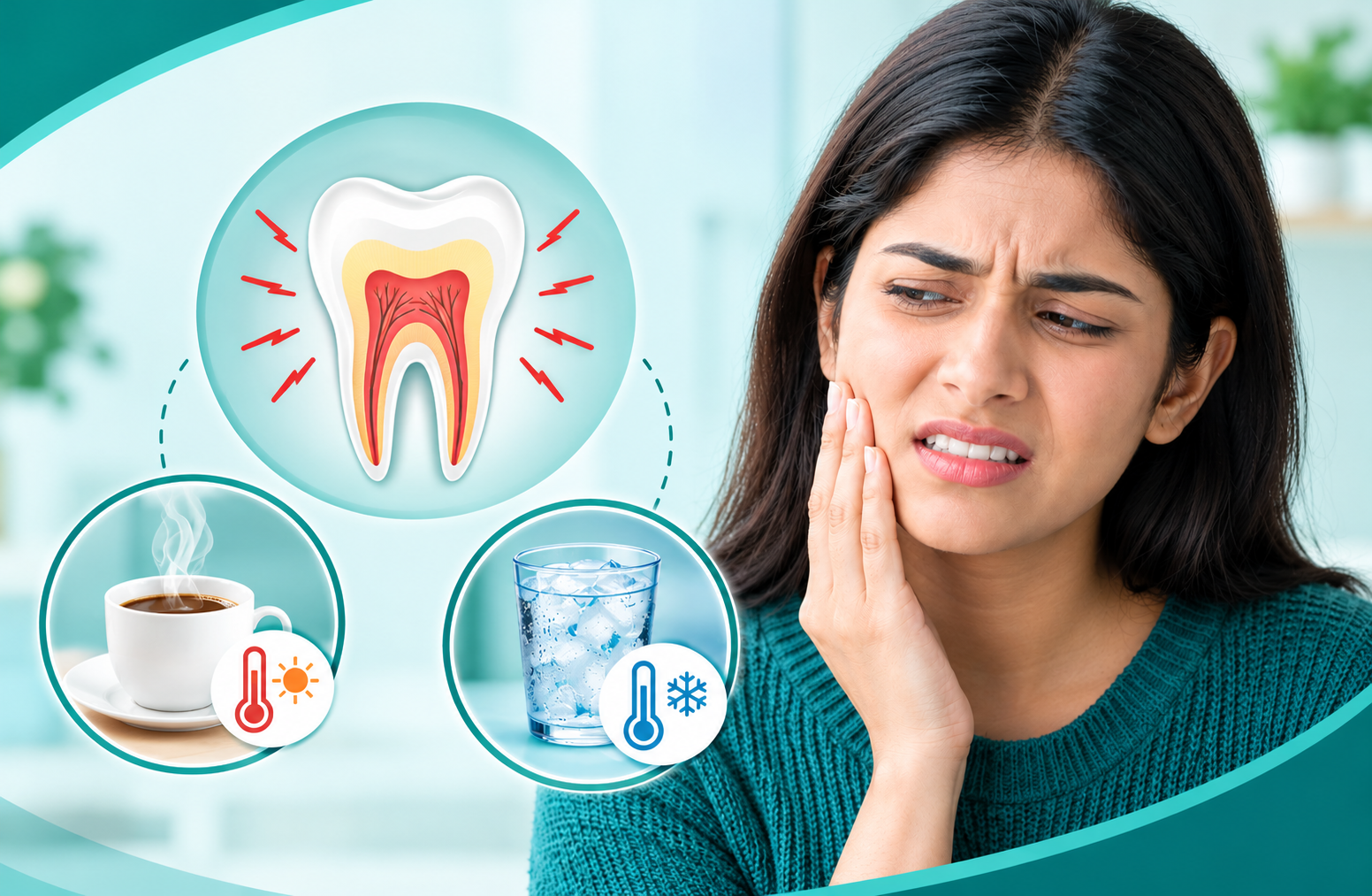
Before understanding the sensitive teeth causes, it is necessary to review the anatomy of a tooth. A layer of enamel covers the crown of a tooth, and cementum covers the tooth’s root. Dentin, a porous material, is found beneath the enamel and cementum and extends into the core of a tooth.
Sensitive teeth can cause discomfort when exposed dentin reacts to hot, cold, sweet, or acidic substances. This may happen when the enamel is worn away, exposing the dentin to acidic or hot foods and drinks. Understanding what triggers dental sensitivity can help you choose the right sensitive teeth cure to relieve discomfort.
The intensity of the sensation in teeth may vary from mild discomfort lasting a few seconds to more intense pain that affects your ability to eat or drink normally. Dentin hypersensitivity is the medical term for the discomfort caused by sensitive teeth. When the pain is not related to other issues, such as a cavity, it is classified as dentin hypersensitivity. The causes of sensitive teeth can vary, so it is critical to identify the underlying issue and seek appropriate treatment.
Common Causes of Sensitivity in Teeth
Sensitive teeth can develop due to several different factors. Understanding the causes will enable one to take the necessary steps to manage the discomfort. Several factors can contribute to tooth discomfort, particularly when eating or drinking foods at different temperatures.
1. Worn Tooth Enamel
Enamel loss is a significant contributor to sensitive teeth. This uncomfortable condition occurs when the enamel that protects the teeth is worn or lost. A soft bristled toothbrush and a gentle brushing technique can help prevent further enamel loss. Other strategies to reduce further loss of enamel include avoiding highly acidic drinks and foods.
2. Receding Gums
The roots of a tooth are not covered by enamel and, therefore, are more sensitive to hot and cold temperatures when the gums have pulled away from the teeth, exposing more of the roots. Brushing aggressively or following improper oral care habits can contribute to gum recession over time. Gum diseases may also cause your gums to recede.
3. Tooth Decay and Cavities
Tooth decay and cavities may also make your teeth more sensitive to temperature changes and certain foods. The pain is often triggered while drinking, eating, or chewing something cold. The discomfort occurs when the nerves in the dentist’s tissues are inflamed. When the cavity grows larger, the pain can persist for a longer period. If someone suspects that they have tooth decay, they should visit a dentist to confirm the diagnosis and discuss treatment options.
4. Cracked or Damaged Teeth
A toothache after drinking something cold can also be caused by a cracked or fractured tooth. When a tooth is broken or cracked, the sensitive tissues inside the tooth can be stimulated when a person drinks something cold or eats something hard. The pain is often more severe when biting down. If someone has a cracked or broken tooth, they should see a dentist as soon as possible because the crack could worsen over time and may require a root canal or other treatment.
5. Teeth Grinding
Teeth grinding, also known as bruxism, is a condition characterized by tightening or grinding your teeth. One of the most typical causes of sensitive teeth, bruxism can gradually erode the tissues inside the tooth, exposing the dentin. To prevent further damage, people who grind their teeth should discuss treatment options with their dentist. A dentist may suggest a custom-fitted night guard to help prevent further tooth damage caused by grinding.
6. Treatment Induced Sensitivity
Certain dental procedures may also cause temporary sensitivity as a side effect. For instance, some people have sensitive teeth after getting their teeth cleaned or having other dental treatments like composite fillings. The good news is that this kind of sensitivity typically goes away after a few weeks. If treatment-induced sensitive teeth persist for an extended period, it is essential to consult with a dentist.
What Is Dentin Hypersensitivity?
Dentin hypersensitivity is the medical term for the temporary pain that occurs when the teeth are exposed to something hot or cold. It is a common concern for many people, although it can often be managed with the correct treatment. Understanding the sensitive teeth causes can help identify why this discomfort occurs. Dentinal tubules, which are tiny channels in the dentin of the teeth, are responsible for transmitting sensations such as pain and pressure to the nerve. When something hot or cold comes into contact with these tubules, they can cause a sharp, quick pain in the teeth that lasts only a few seconds.
Dentin hypersensitivity usually causes brief discomfort that fades quickly, but persistent symptoms should be evaluated by a dentist to rule out other dental problems. Unlike ordinary sensitivity, conditions such as cavities or abscesses may require specific dental treatment. The right sensitive teeth cure depends on the underlying cause, which a dentist can identify through an examination. If you frequently experience an uncomfortable sensation in teeth while eating, drinking, or brushing, consult a dentist to determine the cause and discuss suitable treatment options.
Symptoms You Should Not Ignore
Symptoms may vary from person to person; however, they can indicate sensation in teeth associated with sensitivity if one experiences some or all of the following symptoms. Understanding these signs can help identify possible sensitive teeth causes and determine whether professional dental care is needed.
- Painful or uncomfortable teeth when consuming something hot, such as tea or coffee.
- Eating or drinking something cold, such as water, causes discomfort in the teeth.
- The discomfort or pain is frequently linked to consuming something sweet.
- Brushing the teeth causes discomfort or pain.
- Teeth feel sensitive when breathing in cold air.
- Chewing something causes discomfort in the teeth.
- Discomfort or pain occurs frequently around the same tooth.
A sharp, short discomfort when consuming something hot or cold can be caused by exposed dentin. Pain that persists for a while after the source of the discomfort is removed, on the other hand, may indicate an underlying problem, such as a cavity. Identifying the underlying cause is essential to finding an appropriate sensitive teeth cure. If someone experiences any of these symptoms, they should contact their dentist as soon as possible to schedule an appointment.
How Can One Cope with Discomfort Caused by Sensitive Teeth?
Depending on what is causing the sensitive teeth, there are a few things one might do to get relief. One of the most typical management options for sensitive teeth is desensitizing toothpaste.
Using Desensitizing Toothpaste
Desensitizing toothpaste can help to reduce the discomfort. These toothpastes contain either potassium or fluoride. These ingredients prevent dentinal tubules from being stimulated, reducing the likelihood of painful teeth. It usually takes a few days for the toothpaste to start working, but it typically lasts for up to 12 months. It is crucial to carefully follow the directions provided by the manufacturer and the dentist.
Brushing Technique and Tools
It is critical to adopt a proper brushing technique to avoid further aggravating the sensitive teeth. One should invest in a soft bristled toothbrush and employ gentle motions while brushing the teeth. Furthermore, the brushing should be done for no more than two minutes twice daily. The teeth should be brushed with fluoride toothpaste.
Limiting Acidic Food and Drinks
It is critical to limit these drinks and foods as much as possible. Citrus juices, for example, are highly acidic and contribute to enamel loss on the teeth. Another thing one should avoid doing is brushing their teeth right after consuming highly acidic meals and beverages since this can damage the enamel even more. One should, however, wait 30-60 minutes before brushing teeth after consuming any acid-containing food or drink.
Avoiding Extreme Hot or Cold Temperatures
It is suggested that one temporarily avoids consuming or drinking something extremely hot or cold if they have sensitive teeth.
This will allow the teeth to heal for a while if the pain is caused by exposing the teeth to extreme temperatures. Until the problem is resolved, one should avoid extreme temperatures.
Regular Dental Check-ups
Dental examination and cleaning on a regular basis are essential since they aid in the early detection of any oral health issues. One should make sure to visit their dentist at least once a year for a regular dental examination and cleaning. Additionally, by detecting a cavity or gum disease early, one can avoid future sensitive teeth. One of the most effective ways to treat sensitive teeth is to first diagnose the underlying cause of the discomfort in the teeth.
Sensitive Teeth Cure: What Are the Effective Treatments Available?
There are various effective treatments for sensitive teeth, depending on the sensitive teeth causes. It is essential to visit a dentist to determine the precise cause of the discomfort before selecting a suitable treatment plan. The dentist may recommend desensitizing toothpaste, a fluoride rinse, or another appropriate therapy to help manage the sensation in teeth.
Moreover, if the symptoms do not improve with over the counter treatments, there are several options to explore with a dentist. Finding the right sensitive teeth cure depends on the underlying dental condition. A dentist may recommend one of the following treatments:
- Desensitizing agents like fluoride varnishes
- Dental bonding
- Fillings
- Gum surgery
- Root canal
One should discuss the available treatment options with their dentist to determine which approach is most suitable. In most cases, the dentist will examine the teeth, identify the underlying problem, and recommend treatment based on the diagnosis.
Why Choose Dantam Dental Clinic in Tellapur for Sensitive Teeth Treatment?
Dentam Dental Clinics in Tellapur believes in understanding the cause of a person’s Tooth sensitivity before recommending suitable care. Several factors can contribute to this condition, and identifying the underlying sensitive teeth causes is essential for effective treatment. A comprehensive dental examination can help determine the reason for discomfort and guide patients towards an appropriate sensitive teeth cure based on their oral health needs. If you experience an unusual sensation in teeth, a professional evaluation can help identify the possible cause.
The dental team at Dentam Dental Clinic can recommend suitable treatment options to manage discomfort and improve oral health. Whether you are experiencing persistent sensitivity or looking for a sensitive teeth cure, the clinic can help you understand the next steps after assessing your condition. When it comes to tooth pain, early evaluation is important. Schedule a dental appointment to identify the cause of your symptoms and explore appropriate treatment options.
Frequently Asked Questions
Why do my teeth hurt when I drink cold water?
Can sensitive teeth return to normal?
How Long Does It Take to Find a Sensitive Teeth Cure?
Are Sensitive Teeth a Sign of a Cavity?
Can I Prevent an Uncomfortable Sensation in Teeth?
Should I stop brushing if my teeth are sensitive?
SUBSCRIBE
SUBSCRIBE TO OUR NEWSLETTER

Tooth Extraction in Tellapur: Procedure, Healing & Aftercare
Tooth Sensitivity: Why Do Your Teeth Hurt When Hot and Cold?